
Written by © Alexandra Chambers | 25 April 2025
Email: Neurotopialincoln@outlook.com
Gifted, Targeted and Reframed.
1. The Pivot
Over the past two years, global discourse surrounding mRNA-based interventions has undergone a marked transformation. What was once declared an unquestionable scientific consensus is now being cautiously revised by mainstream voices -not as an admission of guilt, but as a strategic recalibration. This is not transparency; it is a narrative pivot, executed to preserve the credibility of institutions while appearing to hold them accountable because the mounting evidence of harm has become irrefutable.
At the centre of this controlled recalibration are public figures such as Robert F. Kennedy Jr. and Donald J. Trump -both of whom were either directly complicit in, or publicly supportive of, the original covid mRNA pharmaceutical rollout. RFK Jr., despite recent public opposition to mRNA vaccines, has long-standing ties to state institutions and has never meaningfully challenged the core biotechnological paradigms underpinning systemic medical harm (OpenSecrets, 2024). Trump, as the architect of Operation Warp Speed, was instrumental in the emergency deployment of mRNA platforms (HHS.gov, 2020). Their sudden elevation as health freedom heroes is not a correction -it is containment. They serve to absorb public outrage, redirect it into sanctioned channels, and perform the illusion of reckoning without ever naming the full scope of harm.
This harm is not limited to the mRNA era. It spans decades and includes the widespread use of aluminium adjuvants (Exley, 2011), synthetic folic acid fortification known to disrupt methylation (Lucock & Yates, 2005), chronic fluoride exposure (Grandjean & Landrigan, 2014), and the long-term epigenetic consequences of pharmaceutical overreach. These exposures disproportionately affect individuals with MTHFR and related gene mutations -frequently autistic, neurodivergent, or “highly sensitive” populations whose perceptual range includes what has been historically categorized as extra-sensory perception (Rossi, 2012). These are not coincidental injuries. They represent a targeted biomedical suppression of intuitive sensory perception – the very individuals most likely to detect and disrupt the collective hypnosis.
This paper uncovers RFK Jr. and Trump not as truth-tellers, but as false idols, constructed by the same machine they pretend to challenge. Their carefully timed emergence is not a revelation -it is a strategy, and in naming it, this paper seeks to validate those who were harmed, erased, or stigmatised -especially the parents of neurologically harmed and vulnerable children, who deserve justice, not further manipulation.
2. Pharmakeia and the Prophetic Fracture
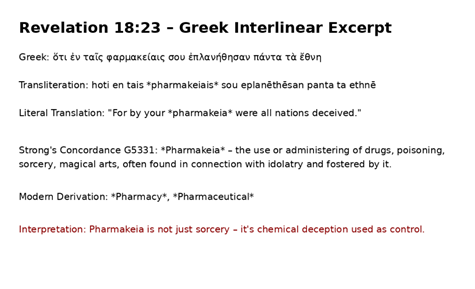
Long before the term “pharmaceutical” became synonymous with modern medicine, its etymological and symbolic roots pointed to something far more complex -and far more insidious. The word “pharmacy” is derived directly from the Greek pharmakeía (φαρμακεία), which appears multiple times in the New Testament, most notably in Revelation 18:23:
“…for thy merchants were the great men of the earth; for by thy pharmakeía were all nations deceived.”
-Revelation 18:23, Greek Textus Receptus
Contrary to common mistranslations that reduce pharmakeía to mere “sorcery,” its historical meaning is more layered. In classical Greek, pharmakeía referred to the use of potions, drugs, and poisons for the purposes of enchantment, control, or ritualistic manipulation (Strong’s Concordance, G5331). The practitioner -a pharmakeus- was understood not only as a healer, but as a sorcerer, enchanter, or a poisoner (Liddell & Scott, 1996). The semantic drift from ancient pharmakeía to modern pharmacy is not accidental -it is a continuation of a paradigm: the use of chemical agents to alter perception, suppress intuition, and enforce submission.
The warning in Revelation is striking not only for its linguistic continuity, but for its sociopolitical framing. It names merchants -not prophets, priests, or generals -as the primary deceivers. These are the “great men of the earth,” elevated by commerce, wealth, and global influence. In this prophetic frame, deception is not overt violence but mass chemical manipulation, deployed on a planetary scale under the banner of health.
In modern application, this deception manifests in the form of regulatory capture, false safety assurances, and the chronic suppression of dissent. The mRNA rollout is only the latest iteration of pharmakeía; its spiritual architecture has been in place for decades -built through systems that pathologise resistance and reward compliance. The neurological dulling of children through adjuvants and synthetic micronutrients is not an accident -it is an updated version of ancient pharmakeía, rebranded as ‘care.’
Importantly, the term pharmakeía is embedded into Revelation as a tool of empire, not healing. If one accepts this premise, it follows that modern pharmaceutical power-particularly when weaponised against the intuitive and neurodivergent -is not just unethical -it is prophetic in its deception; it fulfils the very warning that spiritual institutions have ignored for centuries while hosting vaccination drives in the same halls where this text is read aloud.
The fracture, then, is not just historical or medical -it is spiritual. To expose pharmakeía is not merely to question science, but to confront a lineage of deception that has entwined itself with both state and scripture. This exposé will continue by tracing how this ancient paradigm of chemically enforced control now targets specific intuitive neurotypes -those whose perception threatens the illusion itself.
3. The Biomedical Evidence: Toxins and Neurological Vulnerability
As narrative control erodes, data has become the most subversive form of truth. The biomedical evidence against both traditional paediatric vaccines and the new mRNA platforms is not speculative. It is extensive, cross-disciplinary, and devastating -particularly when analysed through the lens of neurodivergent vulnerability.
Beyond the physical harms induced by pharmaceutical interventions lies a more insidious campaign: the neurological suppression of gifted and perceptually sensitive individuals. This campaign reflects a strategic recognition that certain neurotypes -particularly those with heightened sensory processing, intuitive cognition, and unfiltered emotional perception- are capable of disrupting consensus reality. These individuals, often identified within frameworks such as autistic, high sensitivity (HSP), and so-called ‘indigo children,’ are not disordered. They are neurologically divergent and perceptive, and for decades, they have been systematically targeted.
The primary methods of this targeting are biochemical and epigenetic in nature. One of the most significant vectors is aluminium, introduced into the body via vaccine adjuvants. Research has demonstrated that aluminium has a high affinity for brain tissue and accumulates in regions associated with social cognition and motor control – key areas implicated in autism spectrum disorders (Exley, 2011; Mold et al., 2018). Post-mortem studies of autistic individuals have revealed alarmingly high concentrations of aluminium in neural tissue (Mold et al., 2018), yet these findings remain under-publicised in public health discourse.
The justification for community water fluoridation is built on mid-20th century observational studies that have never undergone rigorous reassessment considering modern toxicology. Initial reductions in dental caries were attributed to fluoride exposure without adjusting for confounding variables such as improved nutrition, widespread use of toothbrushes, increased access to dental care, and public health reforms (Peckham & Awofeso, 2014). As such, the correlation between fluoridation and cavity reduction remains speculative -a post hoc justification that has since been institutionalised into public policy without meaningful critical re-evaluation.
More troublingly, fluoride is a recognized neurotoxin (Grandjean & Landrigan, 2014), and even at so-called ‘optimal’ levels, it has been associated with adverse effects on thyroid function, melatonin synthesis, and bone integrity (Chlubek, 2003; Peckham et al., 2015). One of the most visible and yet systemically downplayed consequences is dental fluorosis -a condition caused by overexposure to fluoride during childhood, resulting in enamel damage, staining, and in more severe cases, pitting and fragility. Far from being a cosmetic nuisance, moderate to severe fluorosis is a biological signal of chronic toxicity (Beltrán-Aguilar et al., 2010). Its presence in developed societies challenges the myth that fluoridation is harmless.
Most significantly, fluoridation has been implemented without individual dosage control and without informed consent -a foundational breach of medical ethics. Unlike medical prescriptions, water fluoridation distributes a drug-like agent across populations regardless of age, health status, or metabolic susceptibility. Those with MTHFR variants, impaired renal function, or heightened neurological sensitivity bear the brunt of this mass experiment -one whose justifications no longer hold up under modern scrutiny.
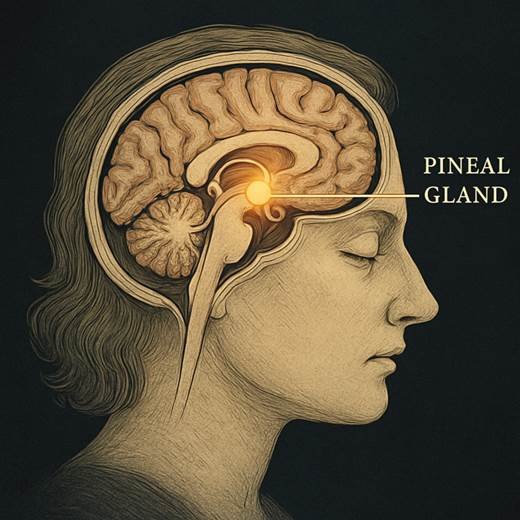
Despite being promoted as a preventative health measure, community water fluoridation has coincided with a marked rise in dental fluorosis -a condition indicating excessive fluoride intake during tooth development. In 1986–1987, the U.S. National Health and Nutrition Examination Survey (NHANES) reported a 22.6% prevalence of dental fluorosis among adolescents aged 12–15 (Beltrán-Aguilar et al., 2010). However, by 1999–2004, this figure had nearly doubled to 40.7%, with notable increases across all severity levels. While fluorosis is often dismissed as merely “cosmetic,” moderate to severe forms result in pitting, staining, and weakened enamel, undermining the very dental integrity fluoride is meant to protect (CDC, 2010). The increasing prevalence of this condition challenges the core assumption of fluoridation’s safety and highlights a failure to adjust public health strategy considering biological oversaturation and individual variability in fluoride intake.
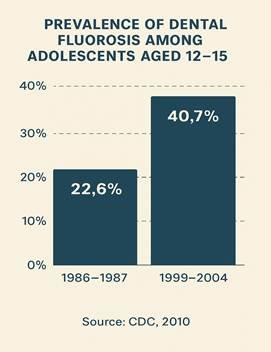
Fluoride has also been shown to accumulate in calcifying tissues -most notably the pineal gland (Luke, 2001). The pineal gland, situated deep in the epithalamus, regulates melatonin synthesis and circadian rhythms, and has historically been associated with perception, spiritual cognition, and intuitive processing (Reiter et al., 1995).
Research has demonstrated that fluoride can inhibit the activity of N-acetyltransferase, a key enzyme involved in melatonin production, leading to disrupted hormonal production and contributing to accelerated glandular calcification (Luke, 2001; Chlubek, 2003). Studies using radiological and histological analyses confirm that the pineal gland accumulates fluoride at concentrations even higher than bone, especially in aging populations, with potential consequences for neuroendocrine regulation and cognitive sensitivity (Luke, 2001; Tan et al., 2018).
This biological suppression aligns with broader environmental trends targeting sensitive and perceptually gifted individuals. While mainstream toxicology tends to underplay the neurological effects of fluoride, emerging research now links pineal gland calcification with sleep disturbances, neurodevelopmental delay, and increased risk of neurodegenerative disorders (Tan et al., 2018; Kaur et al., 2019). In neurodivergent populations, especially those with heightened intuitive or frequency-based perception, this calcification may act as a form of endocrine blunting -effectively muting one of the body’s central energetic regulators.
Another factor to consider is synthetic folic acid; which is present in the majority of processed food including staple foods such as bread, pasta and cereals. While promoted as a preventative measure against neural tube defects, synthetic folic acid is metabolised differently than natural folate and can accumulate as unmetabolised folic acid (UMFA), particularly in individuals with MTHFR gene mutations. UMFA accumulation has been associated with disruption in methylation, the biochemical process critical to DNA repair, neurotransmitter function, and detoxification (Lucock & Yates, 2005; Troen et al., 2006). Methylation dysfunction is highly prevalent in autistic individuals (James et al., 2004), suggesting a direct link between synthetic nutrient policy and neurological dysregulation.
This pattern of injury disproportionately affects neurodivergent children: those who exhibit high sensory acuity, deep empathy, and intuitive intelligence. These are the children who feel more, perceive more, and speak truths the system cannot tolerate. Rather than support these children, the system pathologises them -branding their gifts as deficits, and prescribing chemical sedation as the solution. Psychiatric interventions such as SSRIs, antipsychotics, and behavioural conditioning regimes (including ABA therapy) are not neutral. They are neurological restraints, often administered without informed understanding of the long-term epigenetic impact.
The suppression of these gifted neurotypes amounts to a war on perception itself. In the same way that oppressive regimes target journalists, whistleblowers, and poets, the modern biomedical-industrial complex targets intuitive children -not with bullets, but with injections, diagnoses, and surveillance. The goal is not only to prevent disruption, but to extinguish alternate futures -those guided by empathy, pattern recognition, social justice and multidimensional awareness.
The rise of profound disability in the autistic population and chronic neuroimmune dysfunction diagnoses in children must be understood not only as the collateral damage of modern medicine, but as the intentional byproduct of a system designed to silence the perception before they could align in truth and justice.
3.1 Aluminium in Paediatric Vaccines: Accumulation and Neurotoxicity
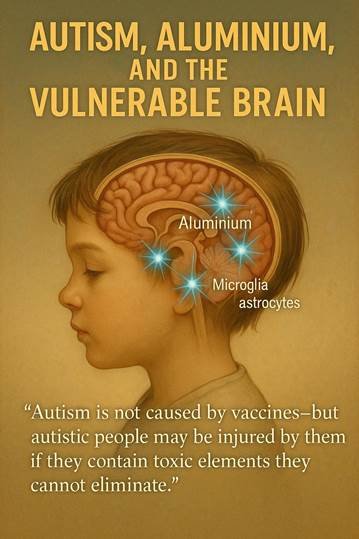
Aluminium adjuvants have been used in vaccines for decades, under the presumption of inertness. However, research has consistently shown that aluminium is bioactive, crosses the blood-brain barrier, and accumulates in neural tissue (Exley, 2011; Gherardi et al., 2015). In post-mortem analyses of autistic individuals, alarmingly high concentrations of aluminium were detected in multiple brain regions associated with emotion regulation and memory (Mold et al., 2018).
Crucially, aluminium’s neurotoxic effects are exponentially more severe in genetically predisposed individuals, particularly those with impaired methylation pathways such as MTHFR, which reduce the body’s ability to detoxify heavy metals (James et al., 2004). These pathways are disproportionately impaired in autistic populations, suggesting a mechanism of selective harm embedded within a universal medical protocol.
3.2 Synthetic Folic Acid and the UMFA Trap
Synthetic folic acid, unlike natural folate, requires enzymatic conversion via the MTHFR gene. In individuals with MTHFR polymorphisms (98% of autistic people have one or more MTHFR gene mutation), this process is disrupted, leading to the accumulation of unmetabolized folic acid (UMFA). UMFA has been shown to interfere with folate receptors, methylation processes, and natural killer cell activity, potentially contributing to both neurodevelopmental and immune dysfunction (Troen et al., 2006; Lucock & Yates, 2005).
Despite the growing literature, folic acid remains aggressively fortified in public food systems and infant formula -disproportionately affecting vulnerable groups and masking long-term effects beneath a superficial public health success narrative.
3.3 COVID-19 mRNA Platforms: Neurological Fallout
The emergency use rollout of COVID-19 mRNA vaccines introduced synthetic lipid nanoparticles and spike protein instructions directly into the body’s intracellular environment. Reports of neurological injury emerged rapidly, including:
- Myocarditis and pericarditis, particularly in young males (Oster et al., 2022),
- Menstrual irregularities and reproductive system inflammation (Alvergne et al., 2022),
- Autoimmune encephalopathy and post-vaccinal Guillain-Barré Syndrome (Finsterer, 2022),
- Severe neuroinflammatory responses documented in autopsy (Katsoularis et al., 2022; Schwab et al., 2022).
In VAERS, over 1.5 million reports of adverse events have now been filed -a historically unprecedented signal. The CDC’s own early safety monitoring detected significant associations with neurological adverse events, yet downplayed causality pending further study (CDC, 2023).
Given what is now known, it is medically indefensible to dismiss these harms as rare or random. The pattern is clear: genetically and neurologically sensitive individuals are being selectively harmed -by design or by negligence- through systemic biomedical intervention.
This includes autistic individuals, individuals with MTHFR or MTRR variants, women with hormone-sensitive neurobiology, and those with histories of vaccine reaction or immune dysregulation.
4. Fractured Mirrors: Mothers, Misrecognition, and Autistic Making
A critical yet rarely explored dynamic in the conversation surrounding vaccine injury, neurodivergence, and narrative capture is the emotional chasm between mothers of profoundly disabled children and late-diagnosed autistic adults. This divide is not the result of ideological opposition, but of misrecognition shaped by biomedical distortion.
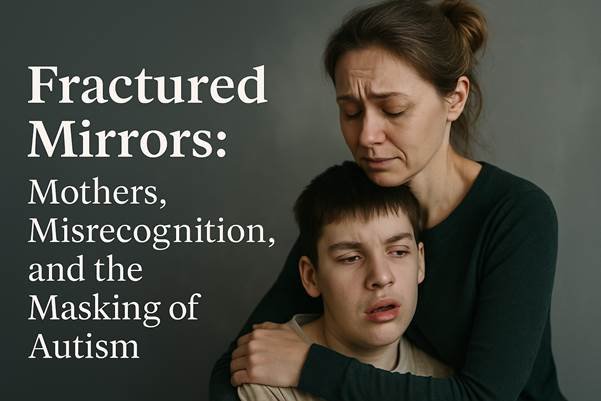
Autism is a highly heritable neurodevelopmental divergence, with heritability estimates between 74% and 93% (Tick et al., 2016; Sandin et al., 2014). Logically, many parents of autistic children are themselves autistic -particularly the mothers, whose neurodivergence often presents in subtler forms due to both masking and gendered diagnostic bias (Lai & Baron-Cohen, 2015). However, some of those mothers do not identify as autistic. Their lived understanding of autism is shaped not by their own internal world, but by the extreme, often traumatic presentations of their children -children who suffer from chronic pain, self-injurious behaviour, gastrointestinal dysfunction, nonverbal distress, and complex medical needs.
This distortion is not natural; it is iatrogenic.
Many of today’s parents -especially women now in their 30s and 40s -are biologically distinct to their children, despite often sharing the same underlying neurotype. This is not due to resilience, but to timing. Earlier generations received fewer childhood vaccines, lower cumulative aluminium doses, and were not subjected to widespread synthetic folic acid fortification or fluoridated water in the same concentrations and combinations now seen globally (CDC, 2023; Seraphina, 2025). Their neurodivergence, while still pathologised, was less likely to be compounded by toxic exposures that disrupt methylation, immune function, and early neural development. As a result, these parents often escaped the full biochemical assault that now defines early childhood -allowing their perception, cognition and intuition to remain comparatively intact.
Ironically, this intactness has made them both more capable of recognising harm- and more vulnerable to emotional capture by controlled opposition. They may see the damage, they may carry the grief, but they may not always understand that they too are more likely neurodivergent -because their version of autism was never given the chance to be seen as valid, gifted, or whole. Their pain is real, their perceptual capacity is real, and their misrecognition of self is the direct result of a medical system that has masked autism behind a profound chemically induced disability.
The divide between these two realities -one shaped by biomedical trauma, the other by unfiltered cognition -has created a fractured mirror within the neurodivergent community. Into that fracture has stepped a set of false idols: RFK Jr., controlled opposition advocates, and political figures who present themselves as allies to ‘warrior’ mothers of the injured -not by addressing the structural causes of harm, but by mirroring their pain while subtly misdirecting and manipulating its source and subsequently accountability.
To heal this divide, it must first be named. The children are not broken because they are autistic. Profoundly disabled autistic children have been biochemically assaulted -and their parents have been abandoned to manage the aftermath alone, often stigmatised and unsupported. Until that distinction of the great division is made, true solidarity between survivors, parents, and autistic adults will remain elusive -and easily manipulated.
The most severely disabled children in this demographic are not simply autistic -they are additionally neurologically injured, often from birth or infancy, through exposure in utero or shortly thereafter to aluminium, synthetic folic acid, fluoride, adjuvanted vaccine schedules, and other environmental biotoxins. Their conditions, while clinically diagnosed as “autism,” may in fact represent layers of toxicological and immunological injury superimposed onto a neurodivergent substrate (James et al., 2004; Exley, 2011). This has created a public and medical misrepresentation of autistic neurodivergence as inherently disabling, chaotic, or tragic.
In contrast, many autistic adults -particularly those diagnosed later in life- report heightened pattern recognition, sensory sensitivity, emotional integrity, intelligence and deep intuitive insight. When unharmed, supported, and recognised appropriately, autistic people function as an evolutionary perceptual asset, not a deficit. The late-diagnosed often embody what autism is when it is not biochemically suppressed -a way of perceiving the world marked by sensitivity, candour, intelligence and energetic attunement, that, in the wrong environment, can leave individuals feeling alienated or ‘different’ from the majority of neurotypical society.
5.Controlled Opposition in Operation
As public awareness of pharmaceutical harms increases, the system has not collapsed -it has adapted. Nowhere is this adaptation more evident than in the rise of controlled opposition figures: public personalities who vocalize select truths while concealing the deeper architecture of harm. Among the most prominent of these figures is Robert F. Kennedy Jr., whose emergence as a health freedom advocate has been celebrated as vindication by many vaccine-injured families and dissident clinicians. However, closer inspection reveals a more calculated function: containment, not confrontation.
RFK Jr.’s criticisms of vaccines are sharply limited; he condemns corporate corruption and regulatory capture but refrains from addressing the deeper epistemic betrayal at the heart of modern medicine. He promotes detoxification and bodily autonomy, but avoids implicating the foundational paradigms of genetic modification, psychiatric suppression, or neurodivergent targeting. Most tellingly, he has repeatedly stated that he is “not anti-vaccine,” and has publicly supported the continuation of certain vaccination programs (Kennedy Jr., 2023).
His organization, Children’s Health Defense, has received significant attention for its legal campaigns -but many of these cases aim at procedural reform, not structural accountability. Even his presidential campaign is funded in part by individuals and entities with longstanding pharmaceutical ties (OpenSecrets, 2024). This is not accidental. It is evidence of engineered dissent -the creation of a pressure valve to absorb growing unrest, validate its grievances superficially, and direct it toward state-sanctioned reform rather than radical transformation.
A parallel can be drawn to Donald J. Trump, whose administration greenlit Operation Warp Speed -one of the most aggressive military-pharmaceutical partnerships in U.S. history. While Trump now claims to oppose mandates, he continues to boast about the speed and success of vaccine development under his leadership (HHS.gov, 2020). His rhetorical shift is not an apology. It is a rebranding, timed to capitalize on populist disillusionment while avoiding responsibility for the damage incurred.
Controlled opposition is not new. It is a time-tested method of narrative management, used extensively in statecraft and psychological operations (Christopher Simpson, 1994). By installing leaders who appear to speak for the oppressed -but whose actions remain tightly within the limits of the system -dissent is neutralized, redirected, and ultimately rendered non-threatening.
RFK Jr. and Trump are not the voice of justice. They are proxies of institutional survival. Their roles are not to deliver truth but to pacify it -to make victims feel seen, just enough to stop them from demanding reckoning. This is not advocacy. It is narrative laundering.
6. The Rebranding of Systemic Harm
What we are witnessing in 2025 is not a collapse of the biomedical-industrial complex, but its rebranding. As the scale of injury becomes impossible to deny -from mRNA-related adverse events to the decades of harm linked to adjuvants, endocrine disruptors, and psychiatric drug overuse -the system has moved into a phase of strategic narrative management. Its new objective is not to deny harm outright, but to curate its admission in such a way that the structure of power remains intact.
This process is well-documented in the literature of crisis management and institutional trust recovery. When systems are too large to fall without social destabilization, they are taught to initiate “pre-emptive accountability” -a technique wherein partial truths are released under controlled conditions, often accompanied by a sanctioned hero figure, to pre-empt calls for genuine accountability (Benoit, 1997; Hearit, 2006). In the case of vaccines and pharmaceutical injury, this hero is increasingly RFK Jr., bolstered by a recalibrated Trump.
These figures do not deny that harm occurred. Instead, they frame it as an unfortunate mistake, a deviation from an otherwise noble system -thereby preserving the moral architecture of modern medicine. This reframing has two effects:
1. It offers symbolic vindication to the injured, especially the parents of disabled children, creating the illusion that justice is underway.
2. It redirects blame onto individual actors or regulatory failures, rather than implicating the system’s core assumptions: chemical dependency, profit-driven experimentation, and neurobiological suppression of sensitive populations.
Through positioning RFK and Trump as the ones to “clean up the mess,” the narrative bypasses the broader questions that families have been asking:
- Were these children targeted?
- What ‘causes’ autism?
- Why are intuitive minds always the ones silenced?
The strategic soft admission phase is performative; it offers no structural accountability, no return of autonomy, and no meaningful shift in medical paradigms. It is, at its root, a public relations operation designed to rehabilitate the system’s image while keeping its mechanisms intact. We are not seeing the end of the harm -we are seeing its codification through selective memory.
This is not justice; it is the laundering of mass-scale biomedical injury into a narrative of noble error.
It is only possible because the most harmed -the neurodivergent, the intuitive, the children whose perception cracked open the lie -have been too stigmatised, too injured, too isolated, or too dismissed to be heard.
7. Current Moves in the U.S.: Databases, Surveillance, and Diagnostic Erasure
While controlled opposition figures frame themselves as saviours of bodily autonomy, a more covert architecture is advancing beneath the surface -one oriented not toward liberation, but toward comprehensive behavioural surveillance, neuro-profiling, and identity erasure. These systems do not merely respond to neurodivergence. They seek to map it, reclassify it, and regulate it through biometric and digital means.
In early 2025, several U.S. states began rolling out enhanced digital health registries, autism “risk profiling” algorithms, and integrated diagnostic databases. The language used – “early intervention,” “preventative support,” “predictive mental health”- echoes prior pharmaceutical campaigns in tone, but marks a new phase in scope. These programs aim not only to identify neurodivergence earlier, but to intervene neurologically -either through pharmaceutical treatment, digital conditioning, or institutional guidance -under the banner of public health optimization (CDC, 2025).
This quiet escalation is not coincidental. It coincides with a surge in vaccine-related injury reports, particularly among autistic, intuitive, or genetically vulnerable populations. As the neurological fallout of both COVID-19 and legacy paediatric vaccines becomes harder to suppress, the state response has taken a sinister turn: categorical erasure of neurodivergence as an authentic identity, reframed instead as pathology to be corrected or neutralised.
Not all regions are aligned with this vaccine trajectory. On April 21, 2025, legislators in Minnesota introduced House File 3219 (HF 3219) -a bill that explicitly designates mRNA injections as weapons of mass destruction and seeks to prohibit their manufacture, possession, or distribution within the state (Minnesota Legislature, 2025). While critics have dismissed the bill as symbolic or fringe, its very introduction signals a rupture in the dominant narrative. It names what few have dared to: that the pharmaceutical system may no longer be corrupt in practice alone, but structurally aligned with biotechnological warfare.
HF 3219 is significant not because it will pass -though it may- but because it marks the first time that state legislation has openly named a class of medical products as bioweapons. It echoes language from whistleblowers such as Dr. Francis Boyle, who authored the U.S. Biological Weapons and Anti-Terrorism Act and has argued that mRNA vaccine platforms violate its principles (Boyle, 2021). If even a fragment of these allegations proves valid, then what is being framed as digital inclusion and mental health reform must be reinterpreted as a coordinated cover-up operation -one that seeks not to heal the injured, but to obscure their capabilities.
Autistic and neurodivergent individuals -particularly those with MTHFR mutations or epigenetic susceptibility -are again at the centre of this biomedical convergence. They are being neurologically altered, data recorded, rebranded, and suppressed in real time. This is precisely because they represent the perceptual edge of the species -the boundary of perceptual awareness – and so their erasure is not only tolerated, but engineered.
8. Targeting the Gifted: The GATE Program and the Neurodivergent Profile
Gifted and Talented Education (GATE) programs were implemented in the United States and United Kingdom as formal initiatives to identify and support children demonstrating advanced cognitive, creative, or academic potential. In the U.S., these programs became widespread following the 1972 Marland Report, with implementation across public school districts throughout the 1970s and beyond (Garden Grove Unified School District, 2012). In the UK, the Young Gifted and Talented Programme was launched in 2002 as a Department for Education-backed scheme to provide digital resources and mentorship until its abrupt conclusion in 2010 (Wikipedia, 2022).
At face value, these programs were designed to meet the educational needs of high-achieving students. However, the selection methods used -often based on IQ testing, nonconformity, and “exceptional potential” -closely aligned with emerging psychological profiles of neurodivergent individuals, particularly those later identified as autistic (Davidson Institute, 2021). Common GATE identifiers included hypersensitivity, pattern recognition, early literacy, and solitary learning preferences -all traits now recognized as part of the autistic or intuitive neurotype. Thus, these programs functioned as state-funded mechanisms for early cognitive profiling.
Notably, very little formal academic research exists analysing the GATE program as a whole. There is no central longitudinal audit, no accessible neurodevelopmental data archive, and no systemic review of outcomes for GATE participants. Given the national scope of the program and its operation over multiple decades, this absence of formal documentation is itself indicative of selective recordkeeping. In many cases, school districts destroyed historical GATE testing records, citing redundancy or data protection -leaving no traceable archive of who was identified, on what basis, or with what long-term outcomes.
This void in the academic literature is compounded by persistent, regionally consistent testimonies from former GATE participants who recall unusual activities beyond typical educational enrichment. These include being given “pink drinks” suspected of containing fluoride, engaging in ESP or psychological testing, and being exposed to emotionally loaded cultural triggers such as the song Puff the Magic Dragon. While these claims remain anecdotal, their widespread repetition -across online forums, oral histories, and independent social threads -suggests a hidden layer of experimentation that was never acknowledged in official program documentation.
Furthermore, declassified CIA records confirm that intelligence agencies have long held strategic interest in the identification and manipulation of gifted individuals. A 1958 CIA memorandum discusses psychological research into “gifted children,” though the intended use of such individuals remains redacted or ambiguous (CIA, 1958). The overlap in timing between this intelligence interest and the rise of GATE programs raises important questions about the dual purpose of these initiatives: one pedagogical, the other potentially psychological or surveillance-based.
In this context, the GATE program becomes more than just an educational initiative. It becomes a case study in how institutions can systematically identify cognitive outliers -only to offer them up to a system incapable of holding their difference with integrity. The absence of formal research, the erasure of records, and the silence around long-term outcomes must be understood not as academic oversight, but as a structural mechanism of concealment.
9. Precedent of Psychological Experimentation: MKUltra and the CIA’s Behavioural Control Agenda
The absence of academic scrutiny and public accountability for the GATE (Gifted and Talented Education) program stands in stark contrast to what is known about prior state-sanctioned psychological experimentation. The most prominent example is the CIA’s Project MKUltra, which provides a powerful historical precedent for covert manipulation of vulnerable individuals under the guise of research or national security. This section outlines the history, methodology, and ethical implications of MKUltra and its predecessors to provide context for present-day concerns regarding covert profiling or manipulation of neurodivergent populations.
Between 1950 and 1973, the CIA orchestrated a network of covert programs designed to explore methods of behavioural control, mind manipulation, and psychological disruption. This initiative began with Project BLUEBIRD (1950), expanded into Project ARTICHOKE (1951), and culminated in Project MKUltra (1953–1963), led by Dr. Sidney Gottlieb of the CIA’s Technical Services Staff (Church Committee, 1976; Marks, 1979).
These programs were a direct response to perceived Soviet advances in ‘brainwashing’ and psychological warfare, and aimed to develop tools for interrogation, influence, and the creation of programmable individuals. The CIA engaged more than 80 institutions – including at least 44 universities, 15 hospitals, and numerous prisons -often through front organisations or indirect funding mechanisms (CIA, 1977; Kinzer, 2019).
Methodologies Employed
The CIA’s behavioural experiments explored:
- Psychoactive drug administration, especially LSD, to test its efficacy in breaking down the psyche (Marks, 1979).
- Hypnosis and suggestion, including experiments on whether individuals could be induced to commit acts against their moral beliefs under suggestive influence (CIA, 1977).
- Sensory deprivation and overload, most famously via Dr. Donald Hebb’s isolation studies at McGill University and Dr. Ewen Cameron’s depatterning experiments (Remnick, 1985).
- Electroconvulsive therapy (ECT) at intensities far exceeding clinical norms (Remnick, 1985).
- ESP and remote viewing, later formalised under Project STARGATE (CIA, 1995).
These experiments were often conducted on non-consenting individuals, including psychiatric patients, prisoners, students, military personnel, and children (Truthout, 2018; Senate Hearing, 1977).
In 1973, outgoing CIA Director Richard Helms ordered the destruction of all MKUltra files, severely limiting subsequent investigations (Kinzer, 2019). Despite this, a cache of misfiled financial documents surfaced via Freedom of Information Act (FOIA) requests in 1977, enabling the U.S. Senate to hold a dedicated hearing exposing the program’s scope and violations (Senate Hearing, 1977).
Many experiments were conducted on individuals who were neurologically or socially vulnerable, including autistic children and mentally ill adults. For instance, child psychiatrist Dr. Lauretta Bender administered LSD to autistic children in the 1950s, producing severe psychological effects (Truthout, 2018). Dr. Ewen Cameron’s patients, including those with mild anxiety or postnatal depression, were rendered permanently damaged by extreme ECT and drug-induced comas (Remnick, 1985).
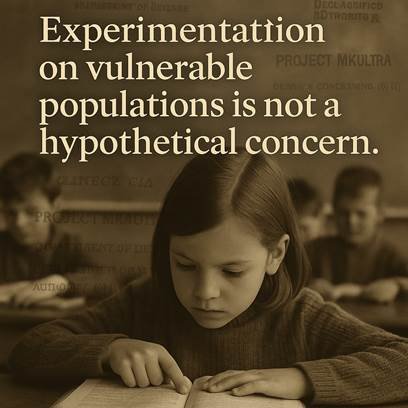
More than 40 universities -including Harvard, Stanford, Columbia, and McGill- received CIA funds for research linked to behavioural control, often without the knowledge of participants (Marks, 1979). These experiments were masked as therapeutic or academic studies, reflecting an erosion of informed consent and research integrity.
The GATE program -with its systematic identification of cognitively exceptional children and lack of public oversight- evokes uncomfortable parallels with the behavioural control projects of the CIA. Though there is no direct evidence linking GATE to intelligence operations, the absence of centralised documentation and the vulnerability of the population involved justify concern. The historical record shows that intelligence agencies have targeted the gifted, the intuitive, and the neurodivergent under frameworks that were later exposed as unethical and illegal (CIA, 1958; Marchetti, 1977).
To ignore these precedents is to dismiss the clear pattern of state experimentation on vulnerable populations under the guise of benevolence.
10. Conclusion: From Fragmentation to Coherence
This report has outlined the emergence of a controlled opposition movement designed not to expose the pharmaceutical-industrial complex, but to contain and redirect the rising awareness of its victims. Through figures such as RFK Jr. and Donald Trump, the system has rebranded itself without dismantling its foundations -offering symbolic justice, emotional resonance, and partial truths in place of structural accountability.
We have traced how vaccine injury, environmental toxicity, synthetic micronutrients, and neuroimmune disruption disproportionately affect those with underlying neurological sensitivities -particularly individuals with MTHFR mutations, autistic traits, and heightened sensory perception. These individuals, and the children born to them, have not simply been “harmed.” They have been neurologically targeted by systems that pathologise perception while reinforcing conformity.
Within this context, the role of mothers of profoundly disabled children demands special attention. These women are not only carrying the burden of care -they are often unknowingly carrying a masked neurodivergence of their own. Autism is highly heritable, therefore many of these mothers are autistic themselves, though undiagnosed, and their self-understanding has been distorted by the iatrogenic presentations they have witnessed in their children. These children are not a reflection of innate autism; they reflect autism under chemical assault.
The divide between these mothers and late-diagnosed autistic adults is not a matter of ideology -it is the outcome of generational difference in exposure. Parents now in their 30s and 40s received fewer early-life pharmaceutical interventions. Their perceptual gifts were not as overrun by synthetic folic acid, aluminium adjuvants, or mRNA technologies. Their children, however, were not so fortunate. The biological gap between generations has widened -not because autism is more common, but because injury source has become more concealed and more systemic.
To reclaim the integrity of the neurodivergent identity -and to rebuild trust across these fractured lines -we must acknowledge this complexity. Inherent autism does not look like systemic collapse. It frequently looks like enhanced sensory perception, emotional depth, and high intuition. Until we stop equating toxic injury with identity, the very people best equipped to speak truth -mothers, sensitives, autistics- will remain divided, stigmatised, unprotected and harmed.
While the suggestion that neurodivergent children may have been deliberately targeted through educational or behavioural programs may sound speculative to some, this perception shifts markedly when historical context is fully considered. The declassified record of MKUltra and its affiliated projects confirms that intelligence agencies have previously exploited vulnerable populations -including children, psychiatric patients, and those with unique cognitive profiles -in covert psychological experiments without consent. When this precedent is combined with the lack of transparency surrounding programs like GATE, as well as the consistent state interest in neurological and behavioural profiling, it becomes increasingly plausible that similar patterns could have persisted in subtler forms. Dismissing these concerns outright ignores a documented legacy of systemic manipulation and erasure under the guise of research and national security.
As state legislation such as Minnesota HF 3219 begins to name the unnameable, and as survivors of biomedical harm demand to be seen without filters or intermediaries, the opportunity arises not for managed reform, but for structural transformation. That transformation should not be led by idolised figures, but by those who value medical ethics and social justice – including the neurodivergent, the intuitive, and the perceptive.
References
Alvergne, A. et al. (2022). COVID-19 vaccination and menstrual changes. British Medical Journal, 376, o1042.
Beltrán-Aguilar, E.D., Barker, L., & Dye, B.A. (2010). Prevalence and severity of dental fluorosis in the United States, 1999–2004. NCHS Data Brief, 53, 1–8.
Benoit, W. L. (1997). Image repair discourse and crisis communication. Public Relations Review, 23(2), 177–186.
Boyle, F. (2021). Legal Affidavit on the Classification of COVID-19 mRNA Injections as Bioweapons. Testimony filed under the Biological Weapons Anti-Terrorism Act.
CDC (2023). Vaccine Safety Datalink: Neurological Adverse Events Reporting Summary.
Centers for Disease Control and Prevention. (2025). National Autism Surveillance Enhancement Project (NASEP): Federal Diagnostic Harmonization Brief.
Central Intelligence Agency (CIA). (1958). Research into gifted children for psychological operations. CIA-RDP75-00001R000200430053-1. Retrieved from https://www.cia.gov/readingroom/docs/CIA-RDP75-00001R000200430053-1.pdf
Chlubek, D. (2003). Fluoride and oxidative stress. Fluoride, 36(4), 217–228.
Church Committee (1976). Final Report of the Senate Select Committee to Study Governmental Operations with Respect to Intelligence Activities. U.S. Senate Report 94-755.
CIA (1958). Research into gifted children for psychological operations. Declassified memo. CIA-RDP75-00001R000200430053-1.
CIA (1977). Project MKULTRA, the CIA’s Program of Research in Behavioral Modification: Joint Hearing before the Select Committee on Intelligence and the Subcommittee on Health, 95th Congress.
Davidson Institute. (2021). Gifted, On the Spectrum, or Both?. Retrieved from https://www.davidsongifted.org/gifted-blog/gifted-on-the-spectrum-or-both/
Exley, C. (2011). Aluminum adjuvants: are they safe? Current Medicinal Chemistry, 18(17), 2630–2637.
Finsterer, J. (2022). Neurological side effects of COVID-19 vaccines. Cureus, 14(2), e22183.
Garden Grove Unified School District. (2012). Gifted and Talented Education (GATE) Program FAQs. Retrieved from https://www.ggusd.us/assets/files/departments/gate/faqs-2012.pdf
Gherardi, R. K. et al. (2015). Macrophagic myofasciitis: characterization and pathophysiology. Neuropathology and Applied Neurobiology, 41(5), 558–570.
Grandjean, P., & Landrigan, P. J. (2014). Neurobehavioural effects of developmental toxicity. The Lancet Neurology, 13(3), 330–338.
Hearit, K. M. (2006). Crisis Management by Apology: Corporate Response to Allegations of Wrongdoing. Lawrence Erlbaum Associates.
HHS.gov. (2020). Operation Warp Speed: Accelerated COVID-19 Vaccine Strategy. U.S. Department of Health and Human Services.
James, S. J. et al. (2004). Metabolic biomarkers of increased oxidative stress and impaired methylation in autism. Am J Clin Nutr, 80(6), 1611–1617.
Katsoularis, I. et al. (2022). Risks of neurological disorders post-COVID vaccination: a national cohort study. Nature Medicine, 28(1), 91–100.
Kaur, S., Sharma, S., & Gill, K.D. (2019). Fluoride toxicity and neurodegenerative changes. Environmental Science and Pollution Research, 26, 12095–12110.
Kennedy Jr., R. F. (2023). [Public interviews and statements compiled via CHD and campaign channels].
Kennedy Jr., R. F. (2023). Campaign Statements on Vaccine Policy and mRNA Technologies. [Archived via CHD].
Kinzer, S. (2019). Poisoner in Chief: Sidney Gottlieb and the CIA Search for Mind Control. Henry Holt.
Lai, M. C., & Baron-Cohen, S. (2015). Identifying the lost generation of adults with autism spectrum conditions. The Lancet Psychiatry, 2(11), 1013–1027.
Liddell, H.G. & Scott, R. (1996). Greek-English Lexicon. Oxford University Press
Lucock, M., & Yates, Z. (2005). Folic acid fortification: a double-edged sword. Current Opinion in Clinical Nutrition & Metabolic Care, 8(6), 555–564.
Luke, J. (2001). Fluoride deposition in the aged human pineal gland. Caries Research, 35(2), 125–128.
Marchetti, V. (1977). Interview in People Magazine, Sept 1977.
Marks, J. (1979). The Search for the Manchurian Candidate: The CIA and Mind Control. Times Books.
Minnesota Legislature. (2025). HF 3219 – mRNA Bioweapon Prohibition Act. [https://www.revisor.mn.gov/bills/bill.php?b=House&f=HF3219&ssn=0&y=2025].
Mold, M., Umar, D., King, A., & Exley, C. (2018). Aluminium in brain tissue in autism. Journal of Trace Elements in Medicine and Biology, 46, 76–82.
OpenSecrets.org. (2024). Robert F. Kennedy Jr.: Campaign Finance Overview. [Archived].
OpenSecrets.org. (2024). RFK Jr.: Funding and PAC affiliations. [Archived].
Oster, M. E. et al. (2022). Myocarditis cases following mRNA vaccination. JAMA, 327(4), 331–340.
Peckham, S., & Awofeso, N. (2014). Water fluoridation: a critical review of the physiological effects of ingested fluoride as a public health intervention. The Scientific World Journal, 2014, 293019.
Peckham, S. et al. (2015). Are fluoride levels in drinking water associated with hypothyroidism prevalence in England? Journal of Epidemiology & Community Health, 69(7), 619–624.
Reiter, R.J., Tan, D.X., & Galano, A. (1995). Melatonin: a potent, endogenous neurohormone. Neuroendocrinology Letters, 16(3), 203–209.
Remnick, D. (1985). “25 Years of Nightmares – Victims of CIA-Funded Mind-Control Experiments Seek Damages.” The Washington Post, July 27, 1985.
Rossi, E. L. (2012). The Psychobiology of Gene Expression. W. W. Norton & Company.
Sandin, S. et al. (2014). The familial risk of autism. JAMA, 311(17), 1770–1777.
Schwab, C. et al. (2022). Autopsy-based evaluation of COVID-19 vaccine adverse reactions. Clinical Neuropathology, 41(3), 113–122.
Senate Hearing (1977). U.S. Senate Select Committee on Intelligence, MKUltra Hearings, 3 August 1977.
Simpson, C. (1994). Science of Coercion: Communication Research and Psychological Warfare, 1945–1960. Oxford University Press.
Strong’s Concordance, G5331: Pharmakeía – “the use of medicine, drugs, or spells.”
Tan, D.X. et al. (2018). Melatonin and brain health: antioxidant and anti-inflammatory effects. Journal of Pineal Research, 65(1), e12513.
The Greek Textus Receptus, Revelation 18:23. (Available via BibleHub & Interlinear tools.)
Tick, B. et al. (2016). Heritability of autism spectrum disorders in a UK population-based twin sample. JAMA Psychiatry, 73(3), 288–295.
Troen, A. M. et al. (2006). Unmetabolized folic acid in plasma and reduced NK cell cytotoxicity. J Nutr, 136(1), 189–194.
Truthout (2018). “The Hidden Tragedy of the CIA’s Experiments on Children.” Investigative article, Aug 28, 2018.
Wikipedia contributors. (2022). Young Gifted and Talented Programme. In Wikipedia, The Free Encyclopedia. Retrieved from https://en.wikipedia.org/wiki/Young_Gifted_and_Talented_Programme
Wilcox, R. A. & Whitham, E. M. (2003). The symbol of modern medicine: Why one snake is more than two. Annals of Internal Medicine, 138(8), 673–677.